
Commercial Fire Risk Assessment Cost Explained
- Posted by Sam Yates
- On September 18, 2026
- 0 Comments
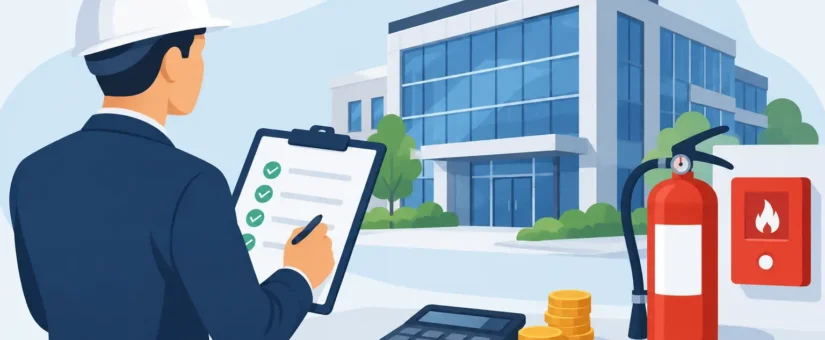
A commercial fire risk assessment cost is rarely just a price for someone to walk around a building with a clipboard. It pays for competent inspection, considered findings, documented evidence and practical advice that helps the responsible person protect occupants and meet their duties under the Regulatory Reform (Fire Safety) Order 2005.
For a small, straightforward office or shop, the cost may be modest. For a multi-storey occupied building, HMO, care setting, school, warehouse or mixed-use property, the assessment may need substantially more time and specialist judgement. The useful question is not simply, “What is the cheapest assessment available?” It is whether the report is detailed, proportionate to the premises and capable of standing up to scrutiny from insurers, lenders, enforcing authorities and your own occupiers.
What does a commercial fire risk assessment cost in the UK?
There is no fixed statutory fee for a fire risk assessment. Providers set their prices according to the premises, scope of inspection, reporting standard and required turnaround. As a broad guide, a simple low-risk commercial unit may commonly cost around £250 to £450 plus VAT. Medium-sized premises with more rooms, staff, visitors or fire-safety systems often fall between £450 and £900 plus VAT. Larger, higher-risk or operationally complex sites can exceed £900 and may run into several thousand pounds where multiple buildings, specialist risks or extensive consultation are involved.
These figures are a starting point, not a substitute for a written quote. A single retail unit with clear escape routes is very different from a converted building containing shops, offices and residential accommodation. Likewise, a warehouse with a small office may be physically large but relatively simple, while a compact nursery or supported-living setting can require close consideration of vulnerable occupants, staff procedures and evacuation arrangements.
A transparent quotation should make clear what is included: the site visit, the scope of the assessment, the format of the report, the timescale for delivery and whether follow-up support is available. It should also identify any assumptions, such as access to all areas, availability of a site representative and whether the price covers one building or an entire estate.
What affects commercial fire risk assessment cost?
The most significant driver is complexity, rather than floor area alone. An assessor needs enough time to inspect the relevant parts of the premises, understand how people use it and assess the adequacy of existing controls. A professional assessment is not a generic form completed from photographs or a questionnaire.
Building size, layout and use
More floors, compartments, stairwells, outbuildings and escape routes mean more to inspect and record. Unusual layouts can also add time. Basement areas, roof voids, shared corridors, internal courtyards and older converted premises can introduce issues that are not apparent from a basic floorplan.
Use is equally important. A daytime office with trained staff may have a different risk profile from a venue open to the public, a hotel with sleeping accommodation or a workplace operating night shifts. Premises with members of the public, children, patients, tenants or people who may need assistance to evacuate require particularly careful consideration.
Occupancy and operational risk
Assessors will consider who is present, when they are present and whether they can readily escape without help. High occupant numbers, lone working, shift patterns, contractor activity and frequent visitors can all affect the scope.
The nature of work also matters. Commercial kitchens, hot works, charging of lithium-ion batteries, storage of combustible materials, flammable liquids, plant rooms and electrical equipment may require more detailed review. This does not automatically mean the premises are unsafe, but it does mean the assessment must be more than a standardised checklist.
Existing fire-safety measures
The condition and suitability of fire doors, emergency lighting, alarm systems, extinguishers, signage, escape routes and management procedures affect the time needed on site and the detail required in the report. Where systems are absent, poorly maintained or uncertain, an assessor may need to record more substantial findings and prioritise remedial actions.
A fire risk assessment does not replace specialist testing, servicing or design work. However, it should identify where further action is needed, such as alarm upgrades, emergency lighting checks, fire door repairs or improved evacuation procedures. The cost of implementing those recommendations is separate from the assessment fee and should be planned for accordingly.
Documentation, urgency and access
A professionally prepared report takes time after the visit. Insurers, conveyancers and enforcement authorities may expect clear findings, an action plan, prioritised recommendations and evidence of a recognised methodology. Reports produced to PAS 79 principles are generally more useful than short template documents because they explain the basis of the assessment and the reasoning behind recommendations.
Urgent appointments, out-of-hours visits and sites requiring phased access can also affect price. This is often worthwhile where a mortgage, lease, insurance renewal or transaction is waiting on the report, or where an occupied property needs an inspection arranged with minimal disruption.
Why the cheapest quote can become the expensive option
A low price is not automatically a warning sign, but it should prompt sensible questions. Some assessments are priced without allowing adequate time for inspection, occupant consultation or report writing. The result can be a vague document with generic recommendations, no meaningful prioritisation and little help when you need to demonstrate compliance.
The responsible person has a duty to make a suitable and sufficient assessment of the fire risks to relevant persons. If a report does not reflect the actual building, its occupancy and its management arrangements, it may offer limited protection when questioned by an insurer or enforcing authority.
A useful report should give you a workable route forward. It should distinguish between urgent life-safety concerns and improvements that can be scheduled, identify who should take action and provide enough detail to obtain comparable quotations for remedial work. That clarity can prevent unnecessary expenditure as well as missed hazards.
What should be included in the fee?
Before appointing a provider, ask whether the quoted cost includes a full inspection by a competent, insured assessor and a formal digital report. You should also establish whether the report will include a clear action plan, photographs where appropriate, risk ratings and recommendations tailored to the premises.
It is sensible to ask about report turnaround, particularly if you have an insurance or transaction deadline. Secure digital access is also valuable: fire risk assessments need to be available to the people managing the building, and records should not disappear into an individual inbox when a staff member changes role.
Aftercare matters too. You may need to clarify a recommendation, share the report with a managing agent or discuss whether a proposed remedial measure addresses the finding. A provider that remains available after delivery can save considerable time for facilities teams and landlords managing several compliance obligations.
Budgeting beyond the assessment
The assessment fee is the cost of identifying and evaluating risk. Your wider budget should allow for any remedial work that the report identifies. In well-managed premises, recommendations may be limited to improved record keeping, staff training, signage or routine maintenance. In other cases, the priorities may include fire door repairs, protected escape routes, detection and warning improvements, emergency lighting or compartmentation work.
Do not assume every recommendation must be completed immediately. A competent report should assign priorities based on risk, helping the responsible person address serious deficiencies without treating every improvement as equally urgent. Where major works are required, obtain appropriate specialist advice and keep evidence of the decisions, quotations and completed actions.
For landlords and managing agents, it can be helpful to align assessments with planned maintenance cycles. This can reduce disruption and make remedial costs more predictable, provided urgent life-safety actions are never delayed for convenience.
How often should you pay for a new assessment?
The Fire Safety Order does not set a universal requirement to commission a brand-new assessment every year. The assessment should be reviewed regularly and whenever there is reason to believe it is no longer valid, such as a change in layout, use, occupancy, staffing, fire-safety systems, building works or a fire incident.
Many organisations choose a regular review cycle, often annually for management purposes, with a more comprehensive reassessment at intervals suited to the premises and risk profile. The correct approach depends on the building and the changes taking place within it. A five-year cycle is sometimes used as a practical benchmark, but it is not a blanket legal rule and should not replace ongoing review.
The best value comes from an assessment that gives you confidence in the condition of your premises and a clear record of what must happen next. If you need a prompt, detailed quotation, Firelux can scope the property properly, arrange an inspection around your operations and provide an insurance-compliant report that supports informed action rather than leaving you with another administrative task.

0 Comments