
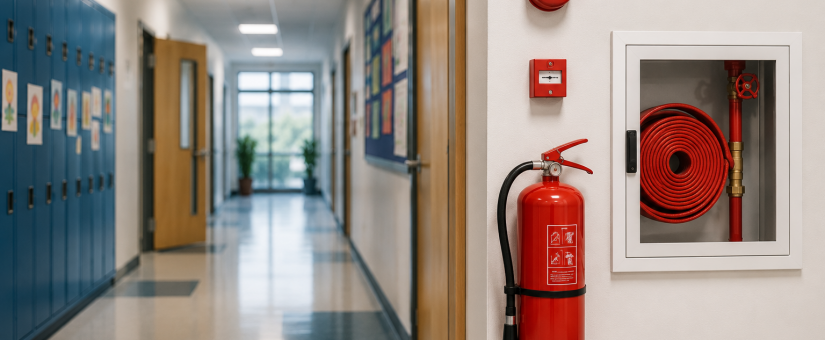
Fire Safety Essentials for Schools and Educational Facilities
- Posted by Sam Yates
- On June 25, 2026
- 0 Comments
- Building Compliance, Commercial Fire Safety, educational facilities, emergency lighting, evacuation procedures, facility management, Fire Alarms, Fire Doors, fire drills, Fire Extinguishers, Fire Prevention, Fire Protection Systems, Fire Risk Assessment, Fire Safety, Fire Safety Training, Health and Safety, school fire safety, school maintenance, school safety, UK fire safety
Protecting Students, Staff, and Learning Environments
Schools are places where students learn, grow, and thrive. However, with hundreds—or even thousands—of occupants in a single building each day, ensuring fire safety is a critical responsibility. From classrooms and science laboratories to kitchens and sports halls, educational facilities present unique fire risks that require careful planning, regular maintenance, and ongoing awareness.
A robust fire safety strategy not only protects lives but also helps minimise disruption to education, safeguard valuable assets, and ensure compliance with fire safety legislation.
Why Fire Safety Matters in Schools
Educational facilities accommodate vulnerable groups, including young children, individuals with disabilities, and visitors unfamiliar with evacuation procedures. In the event of a fire, a well-prepared school can make the difference between a safe evacuation and a serious emergency.
Key objectives of school fire safety include:
- Protecting students, teachers, and visitors
- Ensuring a fast and orderly evacuation
- Preventing fire outbreaks through risk management
- Maintaining compliance with legal fire safety requirements
- Reducing property damage and business interruption
Common Fire Hazards in Educational Facilities
Understanding potential fire risks is the first step in prevention. Common hazards include:
Electrical Equipment
Schools rely heavily on computers, interactive whiteboards, projectors, charging stations, and other electrical devices. Faulty wiring, overloaded sockets, or damaged equipment can increase fire risks.
Best practice:
- Regular Portable Appliance Testing (PAT)
- Avoid overloading extension leads
- Replace damaged electrical equipment promptly
Science Laboratories
Laboratories often contain flammable chemicals, gas supplies, and heat-producing equipment.
Best practice:
- Store chemicals safely
- Ensure staff receive appropriate training
- Maintain emergency shut-off systems
School Kitchens
Commercial kitchens generate heat, grease, and open flames, making them one of the highest-risk areas.
Best practice:
- Clean extraction systems regularly
- Install suitable fire suppression systems
- Train catering staff in emergency procedures
Storage Areas
Paper, cardboard, teaching materials, furniture, and cleaning products can provide fuel for fires if stored improperly.
Best practice:
- Keep escape routes clear
- Avoid excessive storage
- Separate combustible materials from ignition sources
Essential Fire Safety Measures
1. Fire Risk Assessments
Every educational facility should have an up-to-date fire risk assessment that identifies hazards, evaluates risks, and recommends control measures. Regular reviews ensure new risks are identified as buildings or activities change.
2. Fire Detection and Alarm Systems
Early detection saves lives. Modern fire alarm systems provide rapid warning, allowing occupants to evacuate safely.
Schools should ensure:
- Fire alarms are tested weekly
- Systems are professionally maintained
- Manual call points remain accessible
- Smoke and heat detectors are regularly inspected
3. Emergency Lighting
Power failures during an emergency can make evacuation difficult. Emergency lighting ensures escape routes remain visible even when mains power is lost.
Routine testing helps confirm systems will operate correctly when needed.
4. Fire Extinguishers
Different fire risks require different extinguishers. Schools typically require a combination of:
- Water extinguishers for paper and wood
- CO₂ extinguishers for electrical equipment
- Foam extinguishers for mixed fire risks
- Wet chemical extinguishers in commercial kitchens
Staff should understand when it is safe to use extinguishers and when immediate evacuation is the safest option.
5. Fire Doors
Fire doors slow the spread of smoke and flames, protecting escape routes and buying valuable evacuation time.
Routine inspections should check that doors:
- Close fully
- Are free from damage
- Have functioning seals
- Are never wedged open
The Importance of Fire Drills
Fire drills prepare students and staff to respond calmly during a real emergency.
Effective fire drills should:
- Be conducted regularly
- Include all staff and students
- Test different evacuation routes
- Identify opportunities for improvement
- Record outcomes for compliance purposes
Frequent practice helps build confidence and reduces panic.
Staff Training Saves Lives
Teachers, administrative staff, caretakers, and support personnel all play important roles during an emergency.
Fire safety training should cover:
- Raising the alarm
- Evacuation procedures
- Assisting vulnerable occupants
- Basic extinguisher awareness
- Assembly point management
- Reporting fire hazards
Refresher training ensures everyone remains prepared throughout the year.
Maintaining Compliance
Fire safety legislation requires schools to manage fire risks responsibly. This includes maintaining fire protection systems, conducting risk assessments, and ensuring staff receive appropriate training.
Working with experienced fire safety professionals helps schools stay compliant while creating a safer environment for everyone.
Creating a Culture of Fire Safety
Fire safety should not be viewed as a one-time exercise. It is an ongoing commitment involving regular inspections, maintenance, staff engagement, and student awareness.
Simple initiatives such as reporting hazards promptly, keeping exits clear, and practising evacuation procedures contribute significantly to overall safety.
Final Thoughts
Protecting a school means protecting the people inside it. By investing in robust fire safety systems, regular maintenance, comprehensive training, and proactive risk management, educational facilities can significantly reduce the likelihood and impact of fire incidents.
A well-prepared school is not only compliant—it provides peace of mind for students, staff, parents, and the wider community.
Need expert fire safety support for your school or educational facility? Professional fire risk assessments, fire alarm servicing, emergency lighting maintenance, extinguisher inspections, and staff training can help ensure your premises remain safe, compliant, and ready for any emergency.
Book your consultation today with one of our experts:

0 Comments