
Fire blankets: Correct Positioning and Installation Requirements
- Posted by Sam Yates
- On June 25, 2026
- 0 Comments
- business fire safety, Commercial Fire Safety, emergency fire equipment, fire blanket installation, fire blanket maintenance, fire blanket mounting height, fire blanket positioning, fire blanket regulations, fire blanket signage, fire blankets, Fire Prevention, Fire Risk Assessment, Fire Safety, Fire Safety Compliance, fire safety equipment, fire safety guide, kitchen fire blanket, kitchen fire safety, small fire protection, Workplace Fire Safety
Fire blankets are a simple yet highly effective fire safety tool designed to extinguish small fires before they become life-threatening. While having a fire blanket on your premises is important, its effectiveness depends heavily on where and how it is installed. Incorrect positioning can delay access during an emergency, reducing valuable response time.
In this guide, we’ll explain the correct positioning and installation requirements for fire blankets, helping you ensure your premises remain compliant and prepared.
What Is a Fire Blanket?
A fire blanket is a specially woven sheet made from fire-resistant materials, designed to smother small fires by cutting off the oxygen supply. They are particularly effective for:
- Cooking oil and fat fires in kitchens
- Waste bin fires
- Clothing fires involving a person
- Small electrical fires (once the power source has been isolated where safe to do so)
Fire blankets are intended for use only on small, contained fires. If a fire is spreading rapidly, evacuate immediately and call the fire and rescue service.
Why Correct Positioning Matters
During a fire emergency, every second counts. A poorly positioned fire blanket may:
- Be inaccessible because the fire blocks access.
- Expose the user to unnecessary risk while retrieving it.
- Delay the initial response, allowing the fire to grow.
Proper placement ensures the blanket can be reached quickly without requiring someone to move towards the source of the fire.
Recommended Installation Height
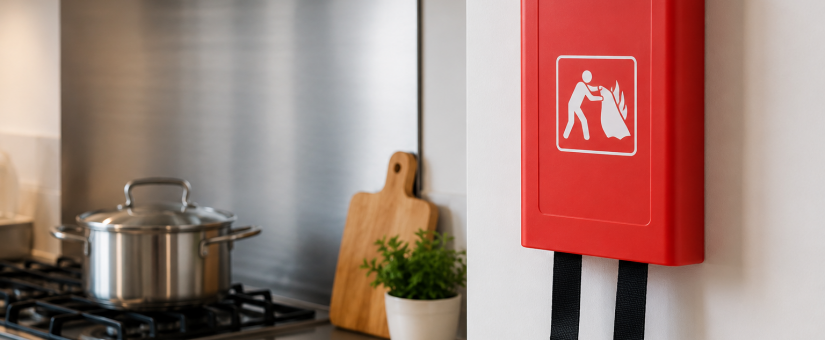
Fire blankets should be mounted securely on a wall using the manufacturer’s supplied bracket or fixing points.
General guidance recommends:
- The bottom of the container should be approximately 1.2 metres above floor level.
- The top should generally not exceed around 1.5 metres, ensuring it remains easily accessible for most users.
- Installation should allow the blanket to be removed quickly without obstruction.
Accessibility is particularly important in workplaces, schools, healthcare environments and public buildings.
Correct Positioning in Kitchens
The kitchen is the most common location for fire blanket installation.
The blanket should be positioned:
- Close enough to cooking equipment for rapid access.
- Not directly above or immediately next to the hob or deep fat fryer.
- Near the room exit where possible.
This positioning allows someone to retrieve the blanket while keeping an escape route behind them. Mounting it directly above a cooker can make it impossible to access if flames spread upwards.
Installation in Commercial Premises
Commercial buildings should position fire blankets according to the risks present.
Common locations include:
- Staff kitchens
- Restaurant cooking areas
- School food technology classrooms
- Laboratory areas
- Workshop canteens
Fire blankets should always be clearly visible and free from obstruction by furniture, storage or equipment.
Signage Requirements
Fire blankets should be easy to locate during an emergency.
Consider installing:
- Fire blanket identification signs above the unit.
- Directional signs where the blanket is not immediately visible.
- Photoluminescent signs where lighting may fail during an emergency.
Clear signage reduces confusion and improves emergency response times.
Avoid These Common Installation Mistakes
Many buildings unknowingly reduce the effectiveness of their fire blanket through poor placement.
Avoid:
- Installing directly above cooking appliances.
- Mounting behind doors or inside cupboards.
- Blocking access with shelving or equipment.
- Installing too high for safe reach.
- Positioning where steam, grease or excessive heat may damage the container.
Regular inspections should also ensure the blanket remains securely mounted and undamaged.
Maintenance and Inspection
Unlike fire extinguishers, fire blankets require relatively little maintenance. However, they should still be checked regularly.
Inspect for:
- Damage to the container.
- Missing or broken pull tabs.
- Signs of contamination.
- Secure wall fixings.
- Clear access and visible signage.
If the blanket has been used or damaged, it should be replaced immediately.
Are Fire Blankets Required?
The need for fire blankets depends on the fire risk assessment for your premises.
Many commercial kitchens, educational settings and catering environments include fire blankets as part of their fire safety equipment due to the increased risk of cooking-related fires. While not every workplace is legally required to have one, they are widely regarded as best practice wherever small cooking fires could occur.
Final Thoughts
A fire blanket is only effective if it can be reached quickly and used safely. Installing it in the correct location—visible, accessible and away from the immediate fire hazard—can make a significant difference during the critical first moments of a fire.
Whether you’re responsible for a workplace, commercial kitchen or public building, reviewing the positioning of your fire blankets should form part of your regular fire safety checks. Combined with appropriate staff training and routine inspections, correct installation helps ensure your fire safety equipment is ready when it’s needed most.
Book your consultation today with one of our experts:

0 Comments