
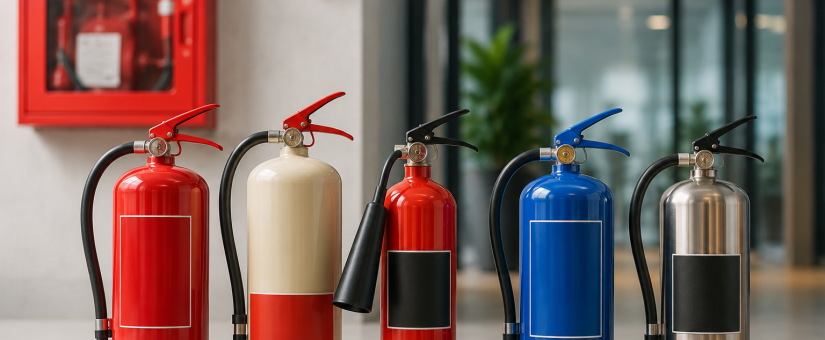
Choosing the Right Fire Extinguisher for Your Premises
- Posted by Sam Yates
- On June 25, 2026
- 0 Comments
- business fire safety, Class A fire, Class B fire, Class C fire, Class D fire, Class F fire, CO2 fire extinguisher, Commercial Fire Safety, commercial kitchen fire safety, dry powder fire extinguisher, Emergency Preparedness, fire extinguisher guide, fire extinguisher maintenance, Fire Extinguishers, Fire Protection, Fire Risk Assessment, Fire Safety, Fire Safety Compliance, Fire Safety Regulations, foam fire extinguisher, office fire safety, water fire extinguisher, wet chemical fire extinguisher, Workplace Fire Safety, Workplace Safety
Fire safety is a critical responsibility for every business owner and property manager. While installing fire alarms and creating evacuation plans are essential, having the correct fire extinguisher on your premises can make the difference between a minor incident and a devastating fire. However, not all fire extinguishers are the same, and choosing the wrong type can be ineffective—or even dangerous.
In this guide, we’ll explain the different types of fire extinguishers, what they’re used for, and how to ensure your premises remain compliant and protected.
Why Choosing the Right Fire Extinguisher Matters
Every fire is caused by different combustible materials, and each requires a specific extinguishing agent. Using the wrong fire extinguisher can spread the fire, cause injury, or damage valuable equipment. Selecting the correct extinguisher ensures that small fires can be tackled quickly and safely before they escalate.
Understanding Fire Classes
Fires are classified according to the type of fuel involved:
- Class A – Wood, paper, textiles, and other solid combustible materials.
- Class B – Flammable liquids such as petrol, diesel, paints, and solvents.
- Class C – Flammable gases including propane, methane, and butane.
- Class D – Combustible metals such as magnesium, aluminium, and titanium.
- Electrical Fires – Live electrical equipment and installations.
- Class F – Cooking oils and fats, typically found in commercial kitchens.
Understanding these fire classes helps determine which extinguisher is appropriate for your workplace.
Types of Fire Extinguishers
Water Fire Extinguishers
Water extinguishers are ideal for Class A fires involving wood, paper, and fabrics. They are commonly found in offices, schools, warehouses, and retail environments.
Best for:
- Offices
- Schools
- Shops
- Warehouses
Do not use on:
- Electrical fires
- Flammable liquids
- Kitchen oil fires
Foam Fire Extinguishers
Foam extinguishers are suitable for both Class A and Class B fires. They create a blanket over burning liquids, cutting off the oxygen supply and preventing re-ignition.
Best for:
- Garages
- Workshops
- Petrol stations
- Industrial premises
Carbon Dioxide (CO₂) Fire Extinguishers
CO₂ extinguishers are designed primarily for electrical fires. They leave no residue, making them ideal for protecting sensitive electrical equipment such as computers, servers, and office electronics.
Best for:
- Offices
- Server rooms
- Electrical switch rooms
- IT facilities
Dry Powder Fire Extinguishers
Dry powder extinguishers are highly versatile and suitable for Class A, B, C, and electrical fires. They are commonly used in industrial settings and outdoor environments.
However, they are generally not recommended for enclosed office spaces due to reduced visibility and inhalation risks after discharge.
Best for:
- Construction sites
- Industrial facilities
- Vehicle workshops
Wet Chemical Fire Extinguishers
Wet chemical extinguishers are specifically designed for Class F fires involving cooking oils and fats. They are essential in commercial kitchens where deep-fat fryers are used.
Best for:
- Restaurants
- Cafés
- Hotels
- Commercial kitchens
How to Choose the Right Fire Extinguisher
When selecting fire extinguishers for your premises, consider:
1. Your Business Activities
Identify the main fire hazards present in your workplace. An office has different risks compared to a manufacturing facility or restaurant.
2. Electrical Equipment
If your premises contain computers, servers, or electrical machinery, CO₂ extinguishers should be included as part of your fire safety provision.
3. Kitchen Facilities
Any commercial kitchen using cooking oils requires wet chemical extinguishers to safely deal with grease fires.
4. Legal Compliance
UK fire safety regulations require businesses to carry out a fire risk assessment and provide suitable fire-fighting equipment. The correct type, quantity, and placement of extinguishers should reflect the identified risks.
5. Professional Advice
A qualified fire safety professional can assess your premises and recommend the most suitable fire extinguishers to meet legal requirements and provide maximum protection.
Fire Extinguisher Maintenance
Having fire extinguishers installed is only part of the solution. Regular maintenance is essential to ensure they remain operational when needed.
Routine servicing should include:
- Annual inspections by a qualified technician
- Checking pressure gauges
- Inspecting for damage or corrosion
- Ensuring clear access and correct signage
- Replacing extinguishers when they reach the end of their service life
Neglecting maintenance could leave your business vulnerable during an emergency.
Staff Training Saves Lives
Even the best equipment is ineffective if employees don’t know how to use it. Basic fire extinguisher training gives staff the confidence to respond safely to small fires while understanding when evacuation is the safer option.
Training should cover:
- Fire extinguisher identification
- Which extinguisher to use for different fire types
- Safe operating techniques
- Emergency evacuation procedures
Final Thoughts
Choosing the right fire extinguisher isn’t simply about meeting legal requirements—it’s about protecting your people, property, and business continuity. By understanding your fire risks, selecting appropriate extinguishers, and maintaining them correctly, you can significantly reduce the impact of a fire emergency.
If you’re unsure which fire extinguishers your premises require, consult a qualified fire safety specialist who can carry out a comprehensive fire risk assessment and recommend the most suitable fire protection solutions for your business.
Book your consultation today with one of our experts:

0 Comments