
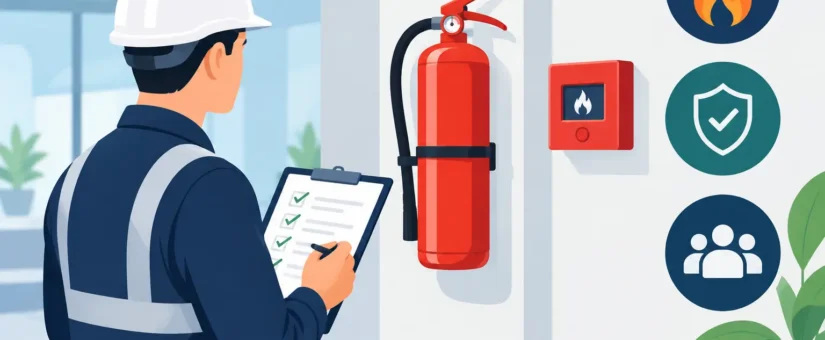
Choosing the Best Fire Risk Assessment Providers
- Posted by Sam Yates
- On October 12, 2026
- 0 Comments
A fire risk assessment can be the document that allows a property sale to proceed, satisfies an insurer’s query, or identifies a serious issue before an incident occurs. That is why choosing between the best fire risk assessment providers should not come down to the lowest quote or the first available appointment. You need a competent assessor, a clear method, and a report that gives the responsible person a practical route to compliance.
For landlords, freeholders, facilities managers and public-sector teams, the real test is whether the provider understands the building, its occupants and the duties attached to it. A generic checklist may look complete, but it can leave major gaps in a complex HMO, a mixed-use block, a school or an occupied commercial premises.
What a capable provider should assess
A suitable provider begins with the premises rather than a pre-written answer. They should inspect the escape routes, compartmentation, fire doors, alarm and detection arrangements, emergency lighting, signage, firefighting equipment, electrical and ignition risks, housekeeping standards and management controls. They should also consider the people at risk, including residents, visitors, employees, contractors and anyone who may need assistance to evacuate.
The assessment must be proportionate. A small, low-risk office will not need the same depth of investigation as a converted block of flats with shared escape routes, sleeping accommodation and vulnerable occupants. Equally, a simple building should not receive a hurried inspection that overlooks poorly maintained fire doors or an obstructed final exit.
For premises in England and Wales, the Regulatory Reform (Fire Safety) Order 2005 places duties on the responsible person to take general fire precautions and keep a suitable and sufficient assessment under review. Residential buildings can also involve additional obligations, depending on their height, layout and use. A reliable provider explains the scope clearly and flags where specialist advice or further investigation is required rather than overstating what a visual inspection can establish.
How to identify the best fire risk assessment providers
The best fire risk assessment providers combine technical competence with a service process that works in real buildings. Inspection quality matters first, but responsiveness, documentation and aftercare matter too, particularly when a lender, managing agent or insurer is waiting for evidence.
Ask about assessor competence and insurance
A provider should be able to explain who will carry out the assessment, their experience with your type of premises and the methodology they use. Competence is more than a certificate on a website. It means being able to recognise fire hazards, understand relevant legislation and guidance, judge the significance of findings, and produce recommendations that are realistic for the property.
Professional indemnity and public liability insurance are also sensible checks. If you are appointing a consultant to advise on statutory compliance, you should know that they are properly insured for the work undertaken.
Be cautious of vague claims such as “fully certified” without detail, or of providers who promise a guaranteed pass before seeing the site. A fire risk assessment is not a pass-or-fail certificate. It is a documented evaluation of risk and the measures needed to reduce it.
Look for a recognised assessment methodology
Ask whether the report follows PAS 79 principles or another established methodology appropriate to the premises. PAS 79 provides a structured approach to recording significant findings, evaluating risk and setting out an action plan. It helps make reports consistent, intelligible and useful to those responsible for acting on them.
Methodology alone is not enough. The report should show what was observed on site and why each recommendation has been made. If it identifies a deficient fire door, for example, it should state the location, nature of the issue, priority and recommended remedial action. “Improve fire safety” is not an actionable instruction.
Review the report, not only the quote
Before booking, ask for a redacted sample report or a clear explanation of what the finished document contains. A worthwhile report normally records the premises details, occupancy, significant hazards, existing controls, assessment findings, risk rating and prioritised action plan. Photographs can be particularly helpful where they make faults easy to locate and communicate to contractors or managing agents.
The document should also be suitable for the audiences who may need it. Property transactions, insurance renewals and enforcement enquiries often require a formal, well-presented report with a clear date, assessor details and evidence of a considered inspection. Cloud-based access and secure digital copies can save time when several stakeholders need the latest version.
Test responsiveness before you appoint
Speed is valuable when a conveyancer, lender or insurer has requested an assessment, but a fast appointment should not mean a superficial service. Ask how quickly the provider can attend, when the report will be issued and whether urgent or out-of-hours visits are available where the building is occupied.
Good communication is often the difference between a manageable compliance project and a prolonged administrative problem. You should be able to speak to someone who can explain the booking process, arrange access around tenants or business operations, and answer sensible questions once the report arrives.
Do not confuse a report with completed compliance
A fire risk assessment identifies what needs attention. It does not itself repair a fire door, install emergency lighting, clear a corridor or test an alarm system. The responsible person must ensure that significant findings are addressed, recorded and reviewed.
This distinction is particularly important where a report contains high-priority actions. A provider may coordinate practical fire-safety solutions or advise on alarm installation requirements, but you should still understand who is responsible for each remedial task, the required timescale and how completion will be evidenced. Keep invoices, certificates, photographs and maintenance records alongside the assessment where appropriate.
For managing agents and organisations with multiple sites, an action tracker can be as valuable as the report itself. It assigns ownership, avoids recommendations disappearing into an inbox and creates an audit trail for directors, residents’ management companies or enforcement authorities.
Questions worth asking before you book
A short conversation can reveal far more than a price comparison. Ask whether the provider regularly assesses your property type, whether the quoted fee includes travel and report production, and whether there are likely to be extra charges for re-visits or urgent appointments. Confirm the expected inspection duration, as an implausibly short visit may indicate that the building will not receive the attention it needs.
It is also reasonable to ask how recommendations are prioritised and whether post-report clarification is included. A strong provider will not pressure you into unnecessary works, but they will explain the safety and compliance rationale for material findings in plain language.
If your building has known concerns, raise them at the outset. Recent alterations, changes in occupancy, a history of unwanted fire signals, shared escape routes, leaseholder works or a pending property transaction can all affect the scope and urgency of the assessment.
Price, value and the cost of a weak assessment
Fees vary with building size, complexity, location, occupancy and urgency. The cheapest quote can appear attractive until it produces a sparse report that an insurer, lender or competent contractor cannot use. At that point, the responsible person may pay again for a more detailed assessment while losing time on remedial works or a transaction.
Value comes from a thorough inspection, a report that is clear enough to act on, and accessible support when questions arise. For a landlord with an occupied HMO, flexibility around tenant access may be worth more than a marginal saving. For a facilities team, consistent reporting across several premises may make budgeting and compliance monitoring considerably easier.
Firelux supports property stakeholders across London and the South East with documented assessments, insured assessors, detailed digital reporting and flexible scheduling, including urgent arrangements where circumstances require it. The aim is not simply to issue a document, but to give responsible persons a defensible, practical basis for protecting occupants and managing their duties.
Choose a provider that is willing to understand the building before offering conclusions. A clear assessment, sensible priorities and dependable follow-up give you far more than paperwork: they give you a workable plan for safer premises.

0 Comments