
Fire Risk Assessment for Responsible Persons
- Posted by
- On September 9, 2026
- 0 Comments
A fire risk assessment is not a formality to retrieve when an insurer, lender or enforcing authority asks for it. It is the working record of how people in your building are protected from fire, where the weaknesses are, and who is responsible for putting them right. For landlords, managing agents, employers and duty holders, a clear, current assessment turns a complex legal obligation into a manageable programme of action.
The right assessment must reflect the premises as they are actually used. That means considering occupants, escape routes, fire doors, alarm arrangements, ignition sources, management controls and any building features that could affect the spread of smoke or fire. A generic report or a checklist completed without a thorough inspection may leave the responsible person exposed when it matters most.
Who needs a fire risk assessment?
Under the Regulatory Reform (Fire Safety) Order 2005, the responsible person must take general fire precautions in most non-domestic premises in England and Wales. This commonly includes workplaces, shops, offices, warehouses, schools, healthcare settings, places of worship and communal areas of blocks of flats. The duty may fall to an employer, building owner, freeholder, landlord, managing agent or another person with control of the premises.
The responsible person must ensure a suitable and sufficient assessment is completed, record significant findings where required, and maintain appropriate fire-safety measures. The duty cannot simply be passed to a contractor. A competent assessor can inspect the building and produce the report, but the responsible person remains accountable for reviewing findings and ensuring actions are addressed.
For multi-occupied residential buildings, the position requires particular care. The assessment generally covers communal parts, plant rooms, bin stores, corridors, stairways and other common areas, rather than the interior of individual flats. However, the construction of flat entrance doors, external walls, compartmentation and building-wide systems can all be relevant. Higher-risk buildings may also have additional duties under the Fire Safety (England) Regulations 2022.
Scotland and Northern Ireland operate under different fire-safety legislation. If you manage property across the UK, ensure the assessment and advice are based on the rules that apply in each nation rather than assuming one process covers every site.
What a competent fire risk assessment examines
A site visit should be methodical, evidence-led and proportionate to the building. A small office with a straightforward layout will not require the same depth of investigation as an occupied care facility, a converted HMO or a mixed-use block with commercial units below residential accommodation. The principle is the same: identify hazards, consider who may be at risk, evaluate existing precautions and define the actions needed to reduce risk as far as reasonably practicable.
The assessor will consider potential sources of ignition, fuel and oxygen, including electrical equipment, cooking areas, storage practices, hot works and charging arrangements. They will review how a fire might be detected and communicated, whether the alarm system is appropriate, and how often it is tested and maintained.
Escape is equally central. Routes should be available, suitably protected, adequately lit and clear of obstructions. The inspection may consider travel distances, emergency lighting, fire signage, final exits, evacuation procedures and provisions for people who may need assistance. In a workplace, this can include personal emergency evacuation plans. In residential premises, the evacuation strategy may be stay put, simultaneous evacuation or another building-specific arrangement. The right answer depends on the building design and fire strategy, not on a one-size-fits-all rule.
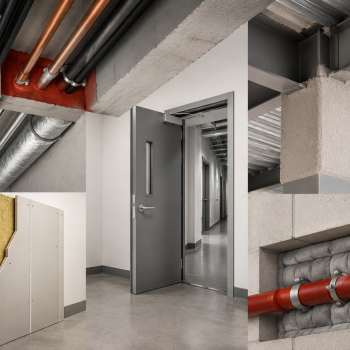
Fire-resisting construction and passive fire protection also require close attention. Defective fire doors, damaged compartment walls, unsealed service penetrations and poorly managed alterations can allow smoke and fire to spread beyond the area of origin. These issues are not always obvious to someone using the building day to day, yet they can materially affect life safety and insurer confidence.
Why PAS 79 reporting matters
A report should be more than a brief statement that a building has been inspected. PAS 79 provides a recognised methodology for documenting fire risk assessments in a structured, auditable way. It helps demonstrate that the assessor has considered relevant hazards, people at risk, protective measures, management arrangements and the prioritisation of recommendations.
For property transactions, insurance renewals and internal governance, the quality of documentation matters. Lenders, legal conveyancers, underwriters and enforcement authorities may need evidence that the report is specific to the premises, professionally prepared and supported by practical recommendations. A dated report with no action plan, unclear risk reasoning or generic wording can create delay at precisely the point you need certainty.
A well-prepared digital report should identify each issue, explain its significance and assign a realistic priority. It should distinguish between urgent life-safety defects and improvements that can be planned into maintenance budgets. For example, a wedged-open fire door on a protected escape route may need immediate attention, while a programme to improve signage could be scheduled promptly but proportionately.
Turning findings into a workable action plan
The assessment itself does not make a building safer. The value comes from acting on the findings and keeping a clear record of decisions, completed works and ongoing checks. This is especially important where several parties are involved, such as a freeholder, managing agent, leaseholders, tenants and maintenance contractors.
Start by dealing with serious deficiencies straight away. Where a route is blocked, an alarm is not functioning, emergency lighting has failed or a fire door cannot perform its purpose, temporary controls may be needed while a permanent repair is arranged. Document what has been done and who is responsible for the next step.
Then set ownership and timescales for the remaining recommendations. A practical plan should cover the corrective work itself, evidence of completion, future testing and inspection dates, and communication with occupants where their co-operation is required. If an assessment identifies that alarm coverage or detection arrangements are unsuitable, obtain competent design advice before commissioning installation work. Adding devices without a considered system design can create false reassurance or introduce maintenance obligations that are not properly managed.
For occupied buildings, access and communication are often the deciding factors. Contractors may need to work around trading hours, vulnerable residents, school timetables or tenant availability. Planning the work in stages can be sensible, provided immediate risks are controlled and the plan does not allow serious defects to remain unresolved.
When should the assessment be reviewed?
There is no universal expiry date that automatically makes every report invalid. A fire risk assessment should be reviewed regularly and whenever there is reason to believe it is no longer valid. In practice, many organisations adopt an annual review cycle, with a more detailed reassessment at suitable intervals based on the premises, its risk profile and any material changes.
A review is necessary after significant alterations, a change of use, changes in occupancy, a fire or near miss, installation of new equipment, a change to evacuation arrangements or evidence that existing controls are failing. A warehouse that begins storing lithium-ion battery-powered equipment, for instance, may have a substantially different risk profile from the site originally assessed.
Keep the report accessible alongside alarm test records, emergency-lighting checks, fire-door inspections, training records and maintenance certificates. Cloud-based access can be particularly useful for managing agents and facilities teams who need to share controlled documents with clients, contractors or insurers without relying on outdated paper files.
Choosing an assessor with competence and accountability
Price matters, but it should not be the only deciding factor. The cheapest inspection can become expensive if its report is too vague for an insurer, cannot support a conveyancing query or fails to identify defects that later require urgent work. Ask how the assessment is undertaken, whether the report follows a recognised methodology, what information will be provided and whether the assessor holds appropriate insurance.
Responsiveness also matters. An urgent sale, mortgage condition, enforcement enquiry or post-incident review may require an inspection outside usual working hours. Yet speed should not mean a reduced scope. The objective is a thorough assessment, clear reporting and practical aftercare, delivered within the timescale your property requires.
Firelux provides PAS 79-aligned assessments, exhaustive digital reporting and flexible booking for properties across the UK. Our assessors explain findings plainly, so responsible persons can make informed decisions rather than being left with a technical report and no clear route forward.
If you are uncertain whether an existing report still reflects your premises, arrange a review before an insurer, lender or incident forces the question. A current assessment, a prioritised action plan and reliable records give you something far more useful than a document for the file: confidence that people and property are being properly protected.

0 Comments