
How Often Should Fire Alarms Be Tested and Serviced?
- Posted by Sam Yates
- On June 25, 2026
- 0 Comments
- BS 5839, Building Safety, commercial fire alarms, fire alarm inspections, fire alarm maintenance, fire alarm regulations, fire alarm servicing, fire detection systems, Fire Protection, Fire Risk Assessment, Fire Safety, Fire Safety Compliance, ire alarm testing, UK fire safety, Workplace Fire Safety
Fire alarms are one of the most important safety systems in any building. They provide early warning in the event of a fire, helping occupants evacuate quickly and allowing emergency services to respond before a small incident becomes a major disaster. However, a fire alarm system is only effective if it is working correctly. That’s why regular testing and servicing are essential.
In this guide, we’ll explain how often fire alarms should be tested and serviced, why routine maintenance matters, and what building owners and managers need to do to stay compliant.
Why Fire Alarm Testing Is Essential
Fire alarm systems can develop faults over time due to dust, wear and tear, damaged components, power failures, or environmental factors. Without regular testing, these issues may go unnoticed until an emergency occurs.
Routine testing helps to:
- Ensure the alarm operates correctly during a fire.
- Identify faults before they become serious problems.
- Minimise false alarms.
- Extend the lifespan of your fire alarm system.
- Meet legal and insurance requirements.
Regular maintenance not only protects your property but, more importantly, helps safeguard the lives of everyone inside the building.
How Often Should Fire Alarms Be Tested?
Weekly Testing
Most fire alarm systems should undergo a simple user test every week.
This involves:
- Activating a different manual call point each week (where possible).
- Checking that the alarm sounds correctly throughout the building.
- Confirming that any connected monitoring systems receive the signal.
- Recording the test in the fire alarm logbook.
Weekly testing ensures that faults are identified quickly and that occupants remain familiar with the alarm sound.
How Often Should Fire Alarms Be Serviced?
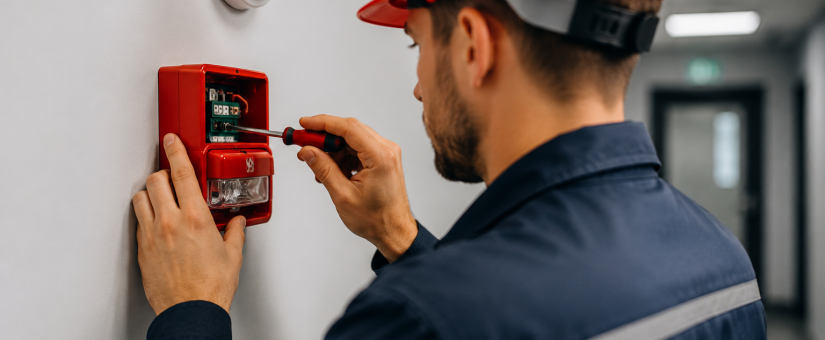
While weekly testing can be carried out by a responsible person on-site, fire alarm servicing must be completed by a competent fire safety engineer.
For most commercial buildings, fire alarm systems should be professionally serviced at least every six months.
During a service visit, engineers will typically:
- Inspect the control panel.
- Test detectors, call points, and sounders.
- Check batteries and backup power supplies.
- Verify communication with monitoring centres.
- Clean components where necessary.
- Identify worn or faulty parts.
- Ensure the system complies with current fire safety standards.
Larger or higher-risk premises may require more frequent servicing depending on the system design, occupancy, and risk assessment.
Legal Requirements in the UK
In the UK, fire alarm maintenance is generally carried out in accordance with BS 5839-1, the British Standard for fire detection and fire alarm systems in non-domestic premises.
The standard recommends:
- Weekly user testing.
- Professional servicing every six months.
- Immediate investigation of any faults.
- Accurate maintenance records in a fire logbook.
Under fire safety legislation, the responsible person for a building has a duty to ensure fire safety systems remain in efficient working order.
Different Buildings May Have Different Requirements
Although six-monthly servicing is standard, some premises require more frequent inspections.
Examples include:
Offices
Typically require servicing every six months unless a fire risk assessment identifies additional requirements.
Schools and Universities
High occupancy buildings often benefit from more regular inspections due to frequent use and the number of manual call points.
Hotels
Because guests may be unfamiliar with evacuation procedures, reliable fire detection is critical. Additional maintenance may be recommended.
Care Homes and Hospitals
Buildings housing vulnerable occupants often require more frequent testing and servicing due to higher life safety risks.
Industrial Premises
Factories and warehouses may expose equipment to dust, moisture, vibration, or extreme temperatures, making more regular servicing advisable.
Common Signs Your Fire Alarm Needs Attention
Even between scheduled service visits, you should contact a qualified engineer if you notice:
- Frequent false alarms
- Fault lights on the control panel
- Damaged detectors or call points
- Beeping or warning messages
- Missing maintenance records
- Battery warnings
- Areas where alarms cannot be heard clearly
Ignoring these warning signs could leave your building unprotected.
What Happens During a Professional Fire Alarm Service?
A comprehensive maintenance visit usually includes:
- Functional testing of detectors and manual call points
- Inspection of all control equipment
- Battery testing and replacement where required
- Cleaning smoke detectors to prevent contamination
- Verification of sound levels
- Inspection of cables and connections
- Review of previous faults
- Updating service records and certification
The engineer will also recommend any repairs or upgrades needed to keep the system operating effectively.
Tips for Keeping Your Fire Alarm System Reliable
Between professional service visits, building managers can help maintain their fire alarm system by:
- Carrying out weekly alarm tests.
- Keeping detectors free from dust and obstruction.
- Reporting faults immediately.
- Maintaining accurate testing records.
- Ensuring all staff know how to report fire alarm issues.
- Booking servicing in advance to avoid missed inspections.
A proactive maintenance routine helps prevent unexpected failures and reduces long-term repair costs.
Final Thoughts
Fire alarms are your building’s first line of defence against fire, but they can only protect people if they are properly maintained.
As a general rule, fire alarms should be tested every week by the responsible person and professionally serviced every six months by a qualified fire alarm engineer. Some higher-risk buildings may require more frequent maintenance based on their fire risk assessment.
Regular testing, professional servicing, and accurate record-keeping ensure your fire alarm system remains reliable, compliant, and ready to perform when it’s needed most.
If you’re unsure whether your fire alarm servicing is up to date, speak with a qualified fire safety professional to arrange an inspection and ensure your system continues to provide the protection your building deserves.
Book your consultation today with one of our experts:

0 Comments